Categoría: Uncategorized

  • Cycling Tourism on the Rise in Patagonia: Measuring the Growth of Cyclists on the Carretera Austral

    Cycling Tourism on the Rise in Patagonia: Measuring the Growth of Cyclists on the Carretera Austral

    Cicloaustral Chile has conducted a study to better understand the size and potential of the cycle tourism niche along Chile’s iconic Carretera Austral. The goal is to foster collaboration between public and private sectors to position this remarkable route as a global capital for cycling tourism.
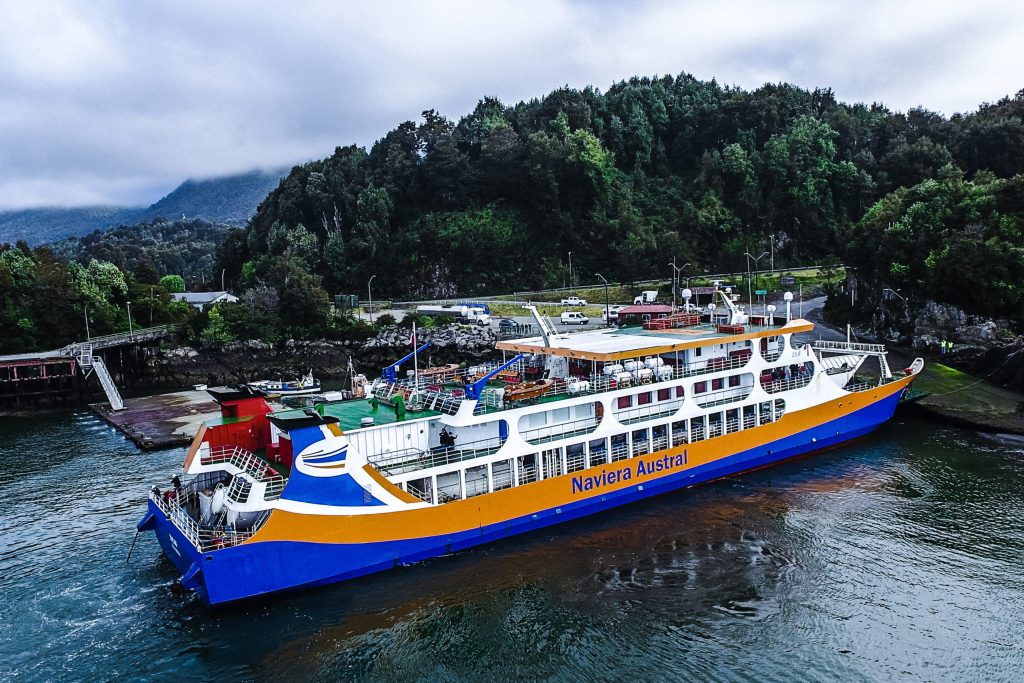
    Source: Retrieved from Naviera Austral. The Jacaf Ferry disembarking in Chaitén.

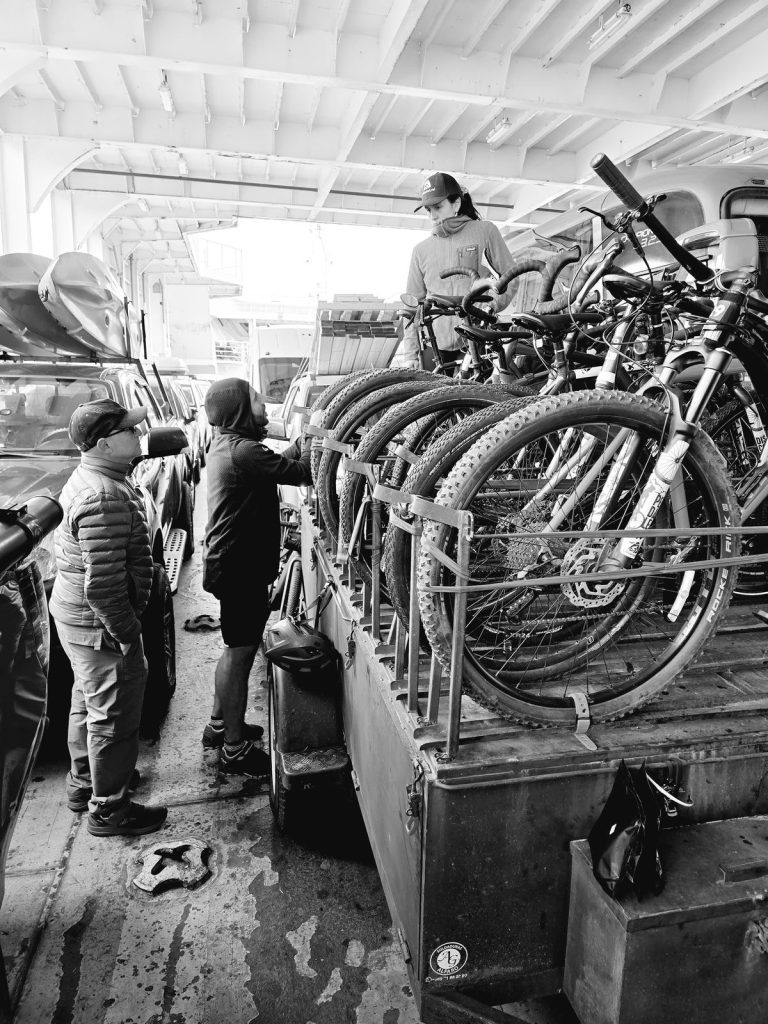
    A valuable indicator of this growth is found in the two ferry services that serve as key gateways to the Carretera Austral. These ferries not only transport cyclists to the route but also reflect the increasing popularity of bicycle travel and its contribution to sustainable tourism in Patagonia.


    A World-Class Cycling Destination

    The Carretera Austral—officially known as Route 7—is one of the premier cycling destinations in South America, running through the heart of Chilean Patagonia. In 2024, the Chilean government designated it a Scenic Route, reinforcing its status alongside international accolades. It was recognized by BBC Travel in 2025 as one of the most beautiful roads in the world, and in 2010National Geographic ranked it the 3rd best cycling route globally in its “Journeys of a Lifetime” series.

    Despite its growing reputation, few studies have attempted to measure the actual impact of cycling tourism along the Carretera Austral or assess the market’s size. This niche plays a significant role in sustainable development, especially in this remote and rural region. Cyclists travel with a light footprint, creating low environmental impact, and their presence supports local economies, including small lodges, campsites, hostels, restaurants, markets, and artisan businesses. Long-distance travel by bike also encourages longer stays, with riders journeying from one village to the next—generating meaningful social and economic benefits.


    Measuring the Movement: Data from Ferry Routes (2017–April 2024)
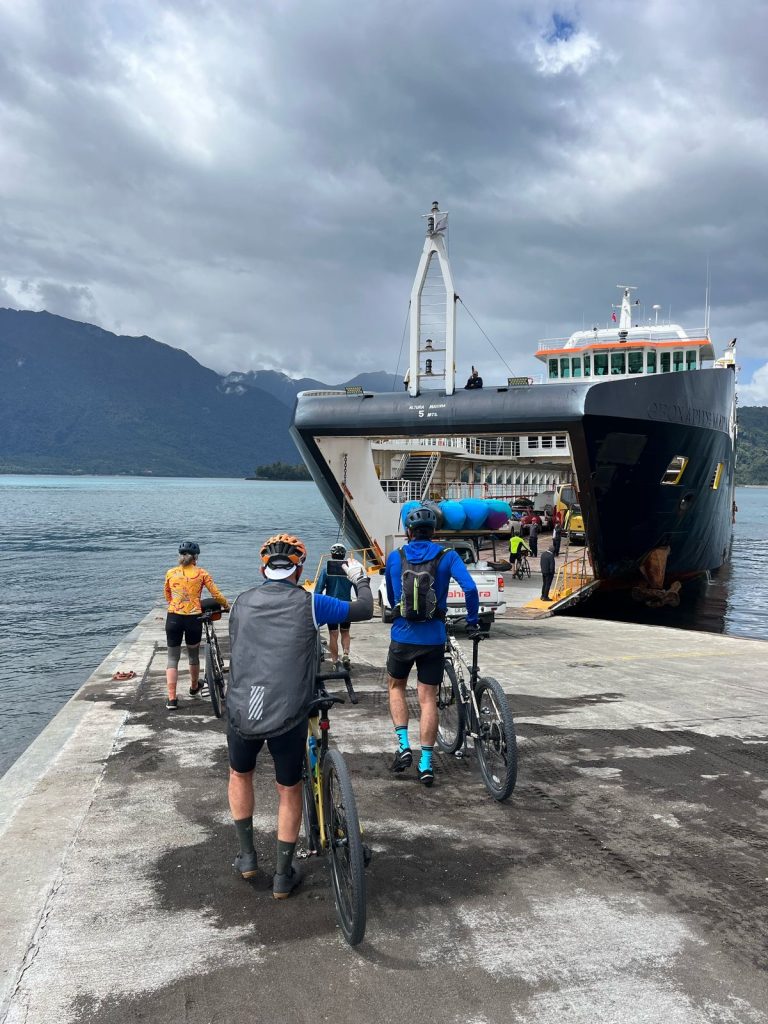
    Cyclist embarking on Bimodal Ferry towards Caleta Gonzalo in Pumalin Douglas tompkins NP.

    To support coordinated efforts among local stakeholders, this report presents the number of cyclists transported via two ferry routes connecting to the Carretera Austral:

    • Hornopirén to Caleta Gonzalo (the “Bimodal Route”)
    • Puerto Montt to Chaitén

    Data was collected through the Transparency Information System of the Chilean government in collaboration with the Undersecretary of Transportation, then refined and analyzed by Cicloaustral Chile and its co-founder, F.V. Padilla.

    Figure 1: Number of Cyclists Transported by Ferries (2017–April 2024)
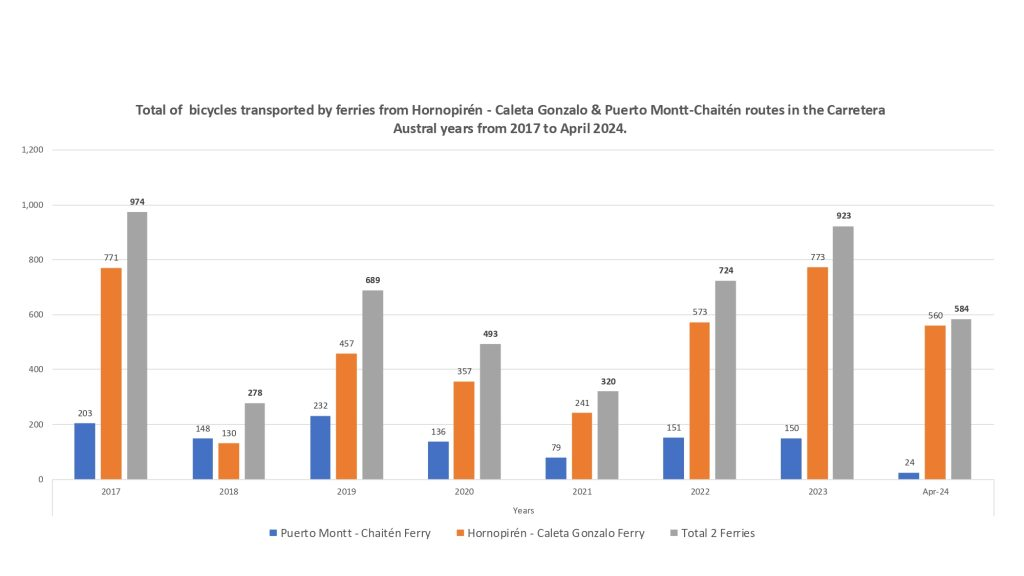
    Between 2017 and April 2024, a total of 4,985 cyclists were transported via these two routes:

    • Hornopirén–Caleta Gonzalo: 3,862 cyclists
    • Puerto Montt–Chaitén: 1,123 cyclists

    The Bimodal Route clearly dominates, carrying over double the number of cyclists compared to the second route.

    Trends Over the Years:

    • 2017 marked a peak year for international arrivals and cyclists on the Carretera Austral.
    • A decline followed in 2018, due to national social unrest and a general downturn in tourism—only 278 cyclists were recorded.
    • 2019 showed slight recovery before the COVID-19 pandemic in 2020–2021 sharply reduced numbers again, with only 320 cyclists in 2021.
    • Despite the pandemic, some adventurous riders still traveled, drawn by the remote, open landscapes and minimal contact with others.
    • In 2022, the tourism sector began to rebound, and by 2023, cyclist numbers nearly matched those of 2017 with 923 bikes transported.
    • The first four months of 2024 already show a strong upward trend, with 584 cyclists—mostly during the high summer season.

    Beyond the Ferries: Total Volume Still Underestimated

    While this ferry data is valuable, it doesn’t capture the full scope of cycling tourism on the Carretera Austral. Many cyclists access the route through other entry points:

    • Balmaceda Airport
    • 15 overland border crossings from Argentina
    • Additional ferry routes from Chiloé and Puerto Natales

    Thus, the actual number of cycle tourists is significantly higher than what ferry data alone reveals.


    Understanding the Seasonality of Cycle Tourism

    Figure 2: Seasonality of Cycling Tourism (2007–2024)
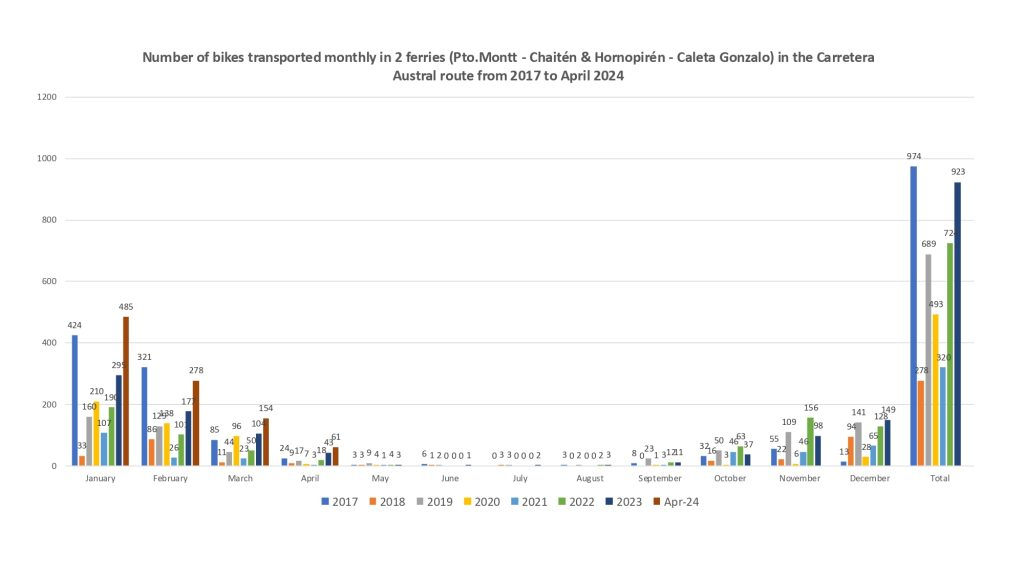
    Clear seasonal patterns have emerged over the years:

    • High Season:
      Peaks in January and February (southern hemisphere summer). In 2024, the ferries carried 485 cyclists in January and 278 in February.
    • Shoulder Season:
      Continues through March (154 cyclists) and April (61). The scenery changes with autumn foliage, creating a unique and colorful backdrop for those who continue pedaling.
    • Low Season:
      From May to August, very few cyclists brave the harsh conditions—icy winds, heavy rain, and snowfall make it a challenge.
    • Spring Recovery:
      September marks the start of a new rise, with numbers gradually climbing. In September 2023, just 11 cyclists were transported and continues constantly increasing in October (37), November (98), and December (149) remarks the starting point of the high season for cycling in Patagonia chile.

    Moving Forward: Strengthening Cycle Tourism

    Recognizing this growing and recurring demand, local and national institutions have an opportunity to:

    • Support bike-friendly infrastructure in rural areas
    • Encourage road-sharing policies for safer travel
    • Consider implementing a dedicated cycling lane as part of ongoing paving projects—potentially creating the southernmost cycling corridor in the world

    On the private side, tour operators, rental services, bike shops, and mechanical support providers should prepare to meet increasing demand. Enhancing hospitality and services along the route can greatly improve rider experience, support over 20 rural communities, and help integrate sustainable tourism into local development strategies.


    Cicloaustral Chile will continue promoting and researching this unique destination, working with communities, government agencies, and travel businesses to ensure the Carretera Austral thrives as a beacon for responsible adventure tourism.

    Etiquetado Carretera AustralCycle Carretera AustralCycle TourismFerriesNumber of cyclist

  • Revealing the Potential of Cycle Tourism on the Carretera Austral

    Revealing the Potential of Cycle Tourism on the Carretera Austral

    by Fernando Padilla. Co-founder of Cicloaustral Chile.

    Demographics, Characteristics, and Trends of Cycle Tourists in Patagonia, Chile

    The Carretera Austral is a 1,247-kilometer route stretching through Patagonia, Chile, connecting over 20 remote villages via a mix of 60% paved and 40% gravel roads. It crosses two regions—Los Lagos and Aysén—and has become an iconic journey for adventure cyclists seeking pristine landscapes, cultural richness, and a profound sense of remoteness.

    The route’s fame is not accidental. National Geographic listed it in 2010 as one of the top 3 “Journeys of a Lifetime” for cycling. Its appeal has only grown with the 2021 creation of the Route of the Parks of Patagonia, a conservation initiative powered by the Thompkins family—founders of The North Face—who made one of the largest land donations in history to expand Chile’s national parks.

    The Carretera Austral is exceptional in its environmental value: over 50% of Chile’s national protected areas are located here. Forests in this region absorb up to three times more carbon per hectare than the Amazon, according to Rewilding Chile and National Geographic (2022). Its high conservation value, low crime, and strong community culture also make it one of the safest and most transformative destinations for slow travel in South America.

    Growth in Cycle Tourism

    A recent article on our website highlighted the growing number of cyclists using ferry systems to access the Carretera Austral. Nearly 5,000 cyclists rode the route between 2017 and 2024 (Cicloaustral and Chile’s Undersecretary of Transportation, 2024), pointing to a clear upward trend. This growth signals a unique opportunity to promote sustainable tourism and community-based development in Patagonia.

    A Groundbreaking Study on Cycle Tourists

    To better understand this emerging tourism niche, Cicloaustral partnered with co-founder Fernando Padilla’s master’s thesis research to conduct the most comprehensive study to date on cycle tourists in the Carretera Austral. The study aims to offer actionable insights to communities, local businesses, and policymakers for sustainable tourism development.

    Methodology

    A post-trip survey was conducted during the 2024 high season (January–March), in both English and Spanish. It was distributed via QR posters in more than 80 bike-friendly hospitality services across the route. A total of 218 cyclists responded, offering a valuable dataset on cycle tourist demographics, preferences, and travel patterns.


    Demographics of Cycle Tourists on the Carretera Austral

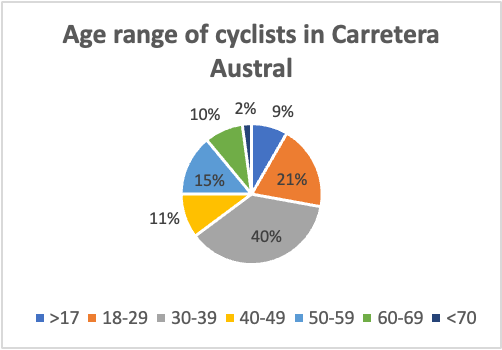
    Age Range of Cycle Tourists

    Source: Cicloaustral Chile & Padilla F.V., 2024

    • The 30–39 age group is the largest, accounting for 40% of all respondents, suggesting a strong presence of working-age adults who likely value long, immersive travel experiences.
    • 21% are in the 18–29 bracket, highlighting younger adventurers, including students and early-career travelers.
    • 26% are aged 40–59, showing that cycle tourism appeals to mid-career adults.
    • A notable 12% of cyclists are over 60, illustrating that this journey is also accessible to senior cyclists with the physical endurance and passion for remote exploration.

    Gender and Trip Partner Correlation

    Source: Cicloaustral Chile & Padilla F.V., 2024

    • Men make up 69% of the total respondents, while women represent 31%—a common pattern in long-distance cycle touring globally.
    • Among solo travelers77% are men, compared to 23% women, suggesting men are more likely to travel alone.
    • Conversely, 49% of women travel with a spouse or partner, reflecting a preference for shared travel experiences among female cyclists.
    • The vast majority of trips—87%—are self-guided, with a smaller portion (13%) participating in organized or guided bike tours.

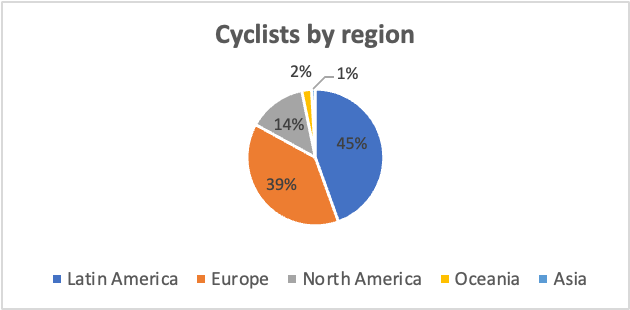
    Origin of Cyclists by Region

    Source: Cicloaustral Chile & Padilla F.V., 2024

    • 63% of cyclists are from international destinations, indicating strong global interest in Patagonia.
    • internationally Europe leads with 39%, followed by North America (14%) and Latin America countries including Chile (45%), showing the Carretera Austral’s broad geographic draw.
    • Chileans represent 37%, highlighting growing domestic cultural interest in exploring their own country in Patagonia and active tourism.

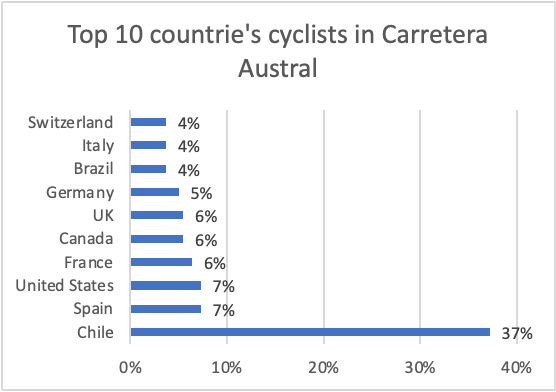
    Top 10 Countries Represented

    Source: Cicloaustral Chile & Padilla F.V., 2024

    • The USA and Spain (7% each) are the most common individual countries of origin, reflecting strong interest in adventure cycling from both North America and Europe.
    • France, the UK, and Canada follow closely at 6%, indicating a robust interest from countries with strong cycling cultures.
    • Germany accounts for 5%.
    • Chile ranks as the top Latin American country, with a solid 37%—demonstrating both growing national awareness and accessibility to domestic travelers.
    • The diversity of nationalities reflects the global appeal of the Carretera Austral and highlights its potential as an international destination for sustainable tourism.

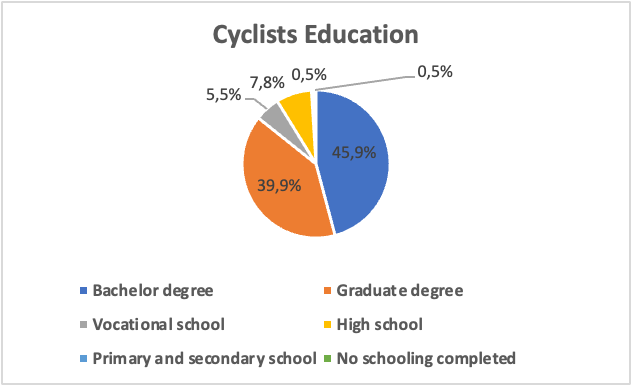
    Education Levels of Cyclists

    Source: Cicloaustral Chile & Padilla F.V., 2024

    • Cyclist are very well educated. 50% hold graduate degrees; 45% have bachelor’s degrees.
    • High levels of education suggest opportunities for engaging riders in conservation and sustainability practices.

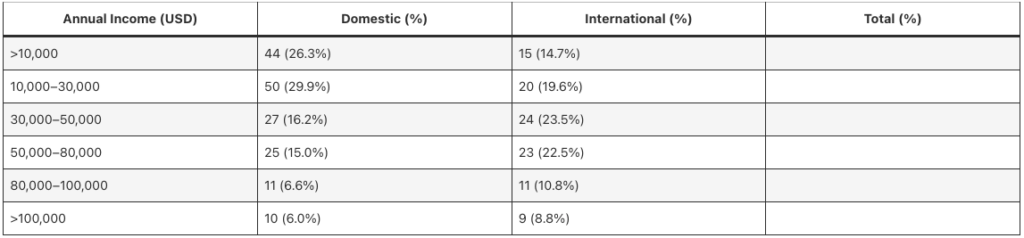
    Annual Income

    Source: Cicloaustral Chile & Padilla F.V., 2024

    • Middle-income travelers (USD 10,000–50,000) make up 46% of respondents.
    • High-income travelers (>50,000) make up 28%.
    • Domestic cyclists report significantly lower incomes than their international counterparts, however, also linked with the young generation of cyclists/ students that travel their own country.
    • Nevertheless, long distance cyclist even having high, middle or low-incomes, tend to spend consciously understanding their significant contributions to small and medium local business in rural villages along Patagonia.

    Characteristics of the Bike Trips

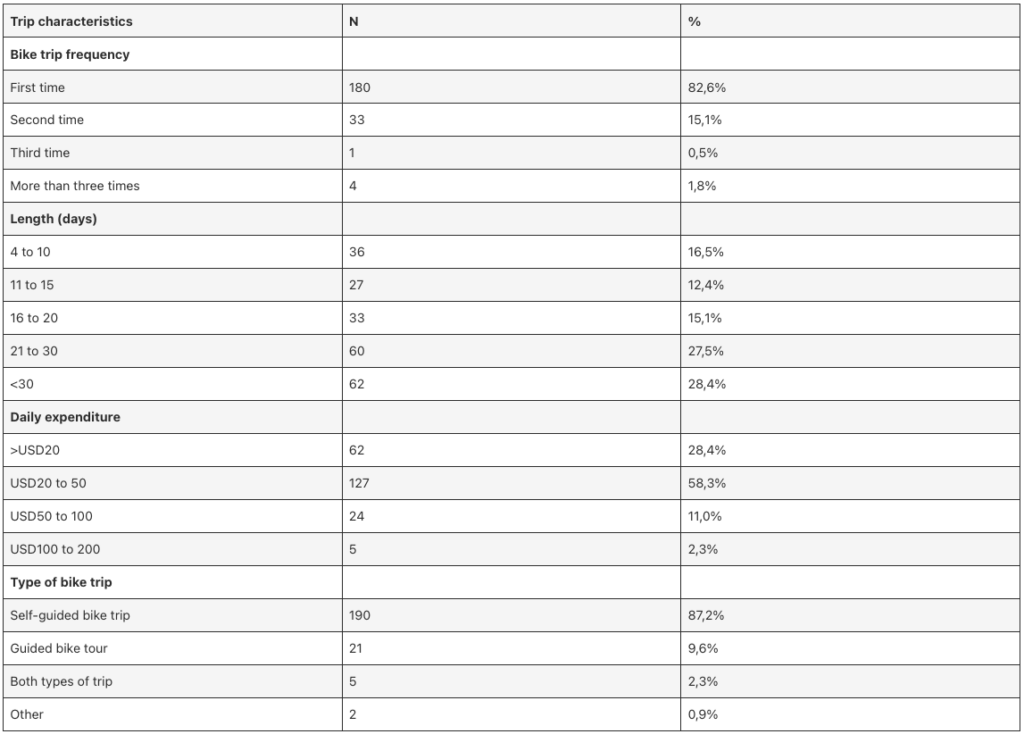
    Trip Features

    Source: Cicloaustral Chile & Padilla F. V., 2024

    • The bike trip frequency shown in the table reveal that first timers 180 (83%) dominated, whereas second timers embody 33 (15%).
    • Trip length both, more than 21 and over 30 days comprise 122 (46%). This fact very impressive thinking about the cyclist contribution due to long stays at the destination.
    • Daily expenditure cyclists spending between USD 20 to 50 is by far the main contributors of the destination, however, those who spend less than USD 20 with 127 (58%) that represent the budget trips, hence an important contributor for locals due to long extensions of their trips.
    • Type of bike trips, self-guided bike trips 190 (87%) explains the phenomenon of cycling, when just 10% represent guided bike tours.

    Travel Companions

    Source: Cicloaustral Chile & Padilla F. V., 2024

    Solo and pair travel are the most common formats, reinforcing the independent nature of these trips.

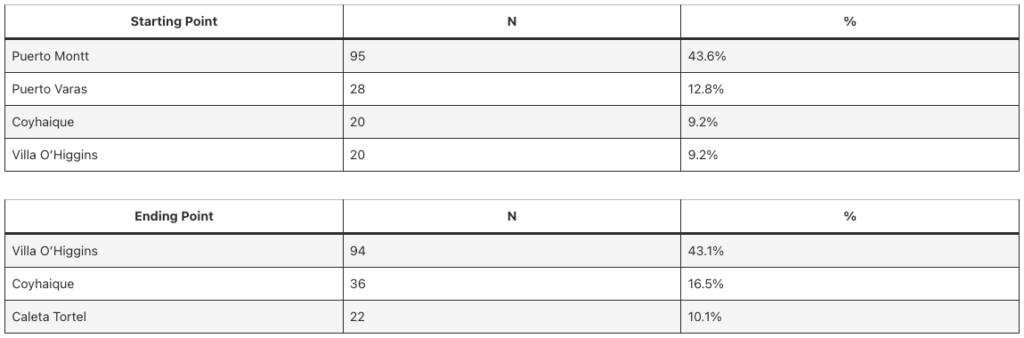
    Main Starting and Ending Points

    Source: Cicloaustral Chile & Padilla F. V., 2024

    Trips generally begin in the north (Puerto Montt) and end in the south (Villa O’Higgins), (Coyhaique) also draws important half-way exit of Carretera Austral due to Balmaceda Airport connection and new trend shows how (caleta tortel) positioned as ending point connecting with torres del Paine Destination through navigation ferry.


    Services and Preferences

    Bicycle and Equipment

    Accommodation Preferences

    Source: Cicloaustral Chile & Padilla F. V., 2024

    Food and Meals cyclist preferences

    • 82% cook their own meals.
    • 72% buy snacks/lunches locally.
    • 70% eat in restaurants occasionally.

    Recreational Activities while cycling

    • Hiking (81%)
    • Photography/Video (54%)
    • Flora & Fauna observation (36%)
    • Kayaking, hot springs, and rafting also popular.

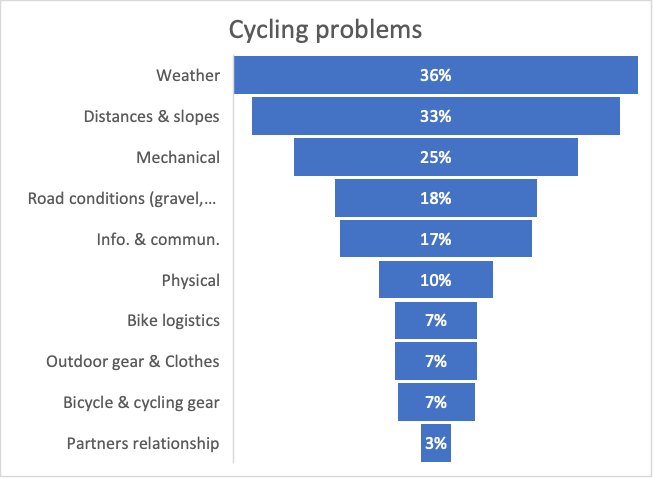
    Main Challenges and issues along the ride.

    Source: Cicloaustral Chile & Padilla F. V., 2024

    Cyclists reported as they main issues along the cycling experience in the Carretera Austrral:

    • Bad weather (36%)
    • Slopes and long distances (33%)
    • Mechanical issues (25%)
    • Gravel roads, dust, and accidents (18%)
    • Language barriers (17%)
    • Physical fatigue (10%)

    These challenges are also part of the transformative experience of cycling through one of the world’s most remote and majestic regions.


    Conclusion

    This study offers the most detailed profile to date of who is riding the Carretera Austral, how, and why. It reaffirms that this route is an emerging hub for sustainable, educational, and meaningful travel. Cicloaustral is proud to contribute data-driven insights to support public institutions, bike-friendly businesses, and local communities.

    As we move forward, our mission remains clear: to promote sustainable development in Patagonia by bridging the needs of cyclists with the unique culture and environment of the Carretera Austral. Together, we can grow this destination responsibly and inclusively.

  • The Ultimate Guide: Villa O’Higgins to El Chaltén Crossing

    The Ultimate Guide: Villa O’Higgins to El Chaltén Crossing

    Linking Chile’s Epic Carretera Austral with Mount Fitz Roy

    Last updated:

    Collaborative guide by: CicloaustralSurí and Ruedas de la Patagonia — local companies committed to sustainable travel and cycle tourism in Patagonia.

    Introduction

    In the heart of remote Patagonia, Chile and Argentina meet among mountains, glaciers, and impossibly blue lakes. Here, at the southern end of the Carretera Austral, begins one of the most legendary crossings in South America: the Villa O’Higgins to El Chaltén route.

    This adventure connects Chile’s Carretera Austral with Argentina’s Mount Fitz Roy, combining two scenic boat rides and a 21 km trekking section between Candelario Mancilla and Lago del Desierto. Every year, hundreds of cyclists and backpackers take on this unforgettable journey between November and April, when the border crossings are open.

    Step 1: Ferry from Villa O’Higgins to Candelario Mancilla

    The adventure starts with a 1.5-hour boat ride across the majestic and bi-national O’Higgins / San Martín Lake, one of the deepest lakes in the Americas. The ferry departs from Bahía Bahamondes pier, located at km 1,247 the final point of the Carretera Austral.

    • If you’re traveling by bike, you’ll need to pedal about 7 km from Villa O’Higgins to the port.
    • On board, enjoy a hot coffee and stunning views of this binational lake surrounded by mountains and fjords until reaching Candelario Mancilla, one of the most remote and magical corners of Chilean Patagonia.
    • Here you’ll find the Chilean border post, where you’ll complete the exit procedures before entering Argentina.

    Schedule

    • Bahía Bahamondes → Candelario Mancilla: 8:00 am — Mondays & Thursdays (Nov–Dec) / Mon, Thu & Sat (Jan–Feb) / Mon & Thu (Mar–Apr)
    • Candelario Mancilla → Bahía Bahamondes: 4:30 pm — same days and seasons

    Price: 65,000 CLP (bicycles free) — approx. USD 70

    Cycle Tips

    1. Exit permit (“Salvoconducto”): Must be completed online before leaving Villa O’Higgins check this link
    2. Travel insurance: Since July 2025, it’s mandatory to have travel insurance to enter Argentina. You’ll be asked to present it at the Argentine border post by Lago del Desierto.
    3. Weather conditions: The weather here changes quickly. Always plan for at least one extra day. And as locals say “Those who rush in Patagonia, lose time.”
    4. Where to stay in Candelario Mancilla:
      • Estancia Santa Teresita camping site / Surí Micro-Shelters (capsules) / Candelario Mancilla Guesthouse
      It’s highly recommended to book ahead, especially in high season.

    Step 2: Trekking from Candelario Mancilla to Lago del Desierto

    This 21 km trek connects Chile and Argentina via the Ruta de los Glaciares (Route of the Glaciers), crossing the Dos Lagunas Pass. It’s a challenging but spectacular trail, featuring forests, rivers, mountains, and the first glimpses of Mount Fitz Roy.

    Section 1: Candelario Mancilla → Border Marker (16 km)

    A public gravel road with moderate incline. The first few kilometers climb steadily with views of O’Higgins Lake and the Southern Icefield. Around km 6 the path levels out, and on clear days, Fitz Roy appears in the distance. You’ll pass an old airstrip, two wooden bridges, and then reach the Chile–Argentina border marker.

    Section 2: Border Marker → North Shore of Lago del Desierto (5.4 km)

    Once in Argentina, the trail descends through dense, humid forest, crossing small rivers, muddy patches, roots, and log bridges. Along the way you’ll spot Laguna Larga and a natural viewpoint overlooking Lago del Desierto, before reaching the Argentine border post and ferry dock.

    The trail can be rough and muddy due to limited maintenance and changing weather. But if you’ve made it this far, you’ve got everything it takes to conquer it!

    Step 3: Lago del Desierto Ferry and Transfer to El Chaltén

    From the north shore, take the ferry across Lago del Desierto — a 45-minute boat ride surrounded by waterfalls, glaciers, and towering peaks.

    Schedule

    • Daily departures (except Wednesdays, Christmas, and New Year) until April 15.
    • 10:00 am and 4:00 pm — North → South (Chile to Argentina) and South → North (Argentina to Chile).

    Price: 40,000 clp + 20,000 for bicycle (~USD 60)

    * You can get the tickets along with our rent a bike booking, or directly from ruedas de La Patagonia or Suri crossing service.

    From the south shore, El Chaltén is 37 km away. You can take a minibus usually timed with ferry arrivals, or continue cycling along one of Patagonia’s most scenic routes, with campgrounds and refuges offering incredible views of the Los Glaciares National Park.

    Final Cycle Tips

    • Respect the environment: This area is fragile and lacks waste management or emergency services. 🚫 Do not camp between border posts, light fires, or leave trash behind.
    • Plan with flexibility: Weather can shift fast — always allow a buffer day or two.
    • If crossing from Argentina → Chile, you’ll only reach the 4:00 pm ferry if you move quickly. Otherwise, stay overnight at the local campground and enjoy the scenery.

    A Journey Like No Other

    The Villa O’Higgins–El Chaltén crossing is more than a border route — it’s a passage between two Patagonian worlds, where nature sets the pace and every kilometer is earned through effort and wonder. Whether on foot or by bike, this adventure is the perfect finale for those traveling the Carretera Austral and continuing toward Mount Fitz Roy.

    Writen by Fernando Padilla from Cicloaustral & Javier Perez from Suri

    Etiquetado Alojamiento en Candelario MancillaCarretera AustralCruce Villa O’Higgins al ChalténCycle Carretera AustralCycle TourismCycling PatagoniaFrom Candelario Mancilla to Lago del DesiertoVilla O’Higgins to El Chaltén crissing